
WARDOGS: The Persistent War Economy and the Battle for Control
1. The Strategic Foundation: Three Factions, One Contested Battlefield
WARDOGS organizes its primary multiplayer experience around three competing factions: Lonestar, Valkyra, and Manticore. The defining feature of this arrangement is that a faction does not merely need to defeat a single opponent. It must compete against two other groups whose decisions can independently change the balance of the match. A force that appears dominant in one engagement may still lose control of the overall battlefield if its opponents divide its attention or exploit an unprotected approach. This three-sided structure makes territorial control fundamentally different from a conventional two-team shooter, where the enemy's position and intentions are often easier to interpret.
The game's battlefield is substantially larger than its active objective. Its overall map is described as approximately 256 square kilometers, while the randomized Control Zone covers a 2-by-2-kilometer area. The distinction between these two scales matters because the entire map represents potential routes, staging areas, and opportunities for movement, but only a particular portion of the terrain directly determines the central scoring contest. Players therefore operate between two overlapping environments: the broader military landscape and the smaller territory where the decisive struggle is taking place.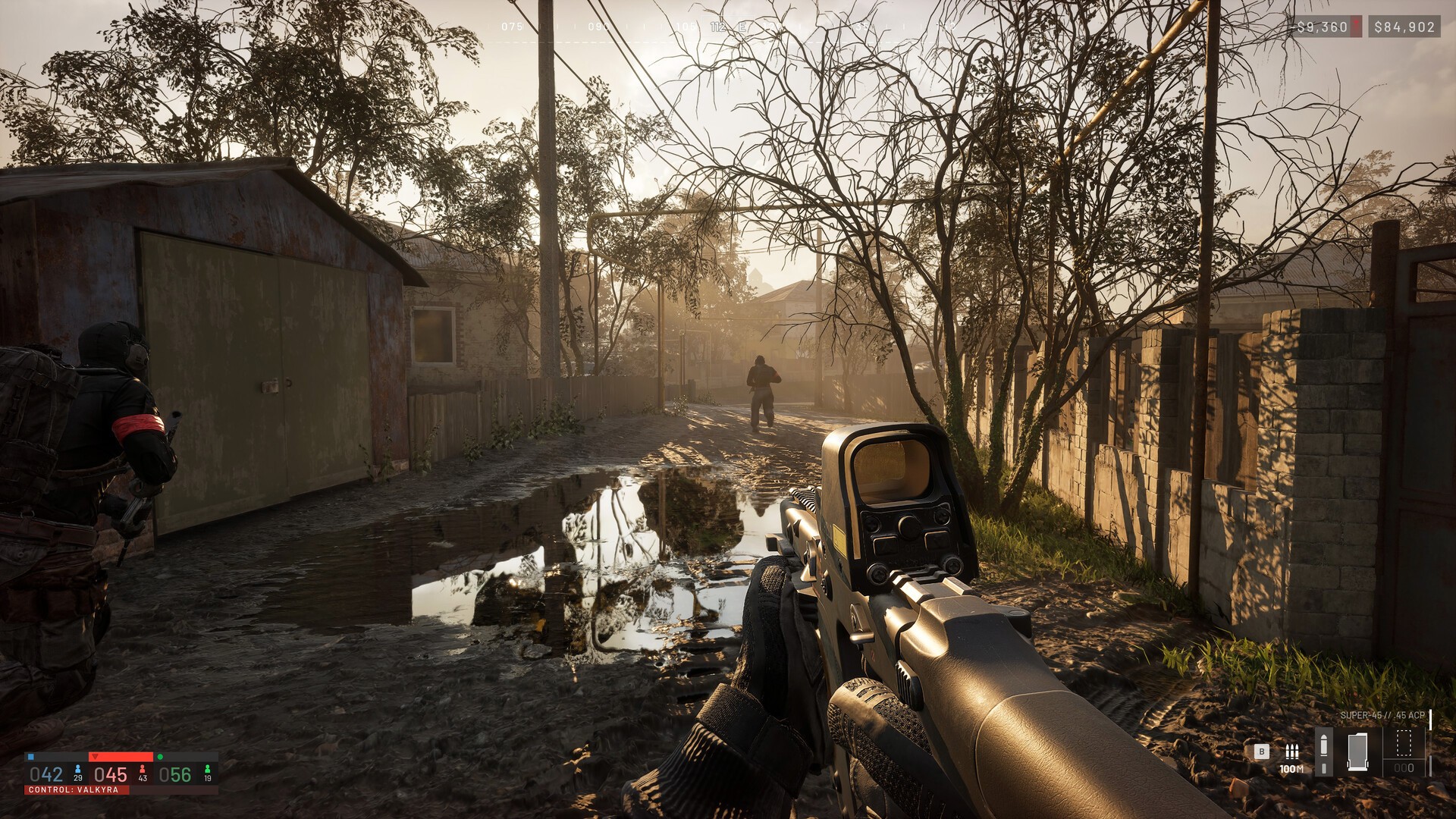
The difference between battlefield presence and territorial influence
A faction can have soldiers spread across the map, vehicles moving between locations, and players engaging enemies away from the objective without necessarily controlling the match. These activities can support the larger operation, but their value depends on whether they eventually influence territorial control, protect the faction's resources, or create an advantage for teammates. The Control Zone provides a common strategic reference point for otherwise independent players.
Why three-way competition changes the conflict
The third faction introduces uncertainty into every major engagement. When two factions fight heavily over a street or defensive position, the remaining faction may find an opportunity to approach the objective from another direction. Alternatively, a faction that commits too many resources to fighting one opponent can expose itself to the other. Consequently, local victories must be evaluated against the wider distribution of power rather than by the immediate number of opponents eliminated.
The result is a battlefield in which tactical superiority and strategic superiority are not identical. Winning an exchange of gunfire is valuable, but maintaining a position that allows a faction to continue scoring is often more consequential. WARDOGS makes that distinction central to its identity by placing the objective, the economy, and the movement of large numbers of players within the same system.
2. The Control Zone: Turning Territory into a Measurable Advantage
The Control Zone is the central mechanism that converts battlefield activity into match progress. WARDOGS uses a King of the Hill-inspired scoring structure: players compete for presence inside the designated territory, and the faction with the strongest numerical presence earns control and accumulates points. The first faction to reach 100 points wins. This creates a direct connection between the physical location of players and the progress displayed by the match's scoring system.
The importance of this arrangement becomes clearer when the Control Zone is viewed as a limited resource. The terrain inside the objective may contain buildings, streets, obstacles, and routes that affect how effectively players can occupy it. Yet the zone is not simply a place where everyone should gather without regard to circumstances. Its strategic value changes according to the opposing factions' positions, the availability of transport, the condition of surrounding structures, and the number of players who can reach the area without suffering excessive losses. A location that is easy to enter but difficult to hold may create a very different contest from one with defensible buildings and several protected approaches.
Numerical presence versus effective battlefield strength
The game's emphasis on player count within the zone creates an important distinction between raw combat strength and objective strength. A faction may possess powerful weapons and armored vehicles but still fail to convert that equipment into points if its infantry cannot establish a sufficient presence in the scoring area. Conversely, a faction with less expensive equipment may remain competitive if enough players occupy the relevant territory and sustain that presence.
Why the objective creates a continuous strategic deadline
Because victory depends on accumulating points, every period of uncontested or dominant control has a measurable consequence. The conflict is not simply about who wins the next firefight; it is about whether the current balance allows one faction to approach the 100-point threshold before its rivals can recover.
This scoring structure also explains why a seemingly minor territorial change can become strategically significant. Losing a building near the objective might open a route for enemy infantry. Losing a route into the zone might delay reinforcements. A vehicle destroyed away from the objective might have little immediate scoring impact, while the loss of transport during a critical push could prevent several players from arriving in time to affect the outcome. The Control Zone gives these otherwise separate events a common measure of importance: their effect on sustained territorial control.
3. The Hot Zone: A Smaller Objective with Outsized Economic Consequences
Within the Control Zone, WARDOGS introduces another layer of competition through the Hot Zone. This moving sub-zone increases the importance of a particular part of the active battlefield by providing additional scoring influence and increased cash rewards. According to the game's community reference material, players inside the Hot Zone contribute twice the normal faction count, making their presence more influential than ordinary occupancy.
The Hot Zone is especially significant because it connects two systems that might otherwise operate independently: territorial scoring and personal economic progression. A player entering the area is not merely helping a faction compete for the objective. That player is also participating in a location where the potential financial reward is higher. The result is a concentrated area of competing incentives. Players may be drawn toward the Hot Zone because it can improve their faction's position, increase their cash earnings, or accomplish both objectives at once.
A concentration of value creates a concentration of danger
The additional value of the Hot Zone naturally makes it an attractive target. When several factions recognize the same opportunity, the zone can become a focal point for infantry assaults, defensive positions, vehicle support, and attempts to interrupt enemy movement. Its importance is therefore not limited to the rewards available to individuals who occupy it. It also changes where players are likely to concentrate their attention.
The economic significance of temporary control
Unlike a permanent bonus, the value of a moving sub-zone is tied to a particular battlefield situation. Its position can change the relative attractiveness of different routes and fighting locations, forcing factions to reconsider where they want to concentrate their available strength. A route that previously led to an ordinary part of the objective may become more important when it provides access to the Hot Zone.
This creates a layered decision for each participant. Entering the area can provide greater economic and scoring influence, but the concentration of enemy players can also increase the likelihood of losing equipment or spending resources to return to combat. The theoretical reward is therefore not the same as the actual outcome. The value of a Hot Zone engagement emerges from the relationship between its rewards, the costs of reaching it, the duration of control, and the resources lost while competing for it.
4. Persistent Cash: The Economic System Behind Every Deployment
WARDOGS distinguishes itself through a persistent cash system that gives financial decisions consequences beyond a single life. Players begin their journey with $10,000, purchase weapons, equipment, utility items, and vehicles for individual lives, and can retain their remaining cash between matches. The official game description also identifies team-support actions, including reviving squadmates, transporting friendly players, and controlling the objective, as ways to earn money.
This structure changes the meaning of purchasing equipment. In a conventional shooter with freely available class loadouts, selecting a powerful weapon may be primarily a question of preference or role. In WARDOGS, buying equipment also represents an allocation of persistent resources. The money spent on one deployment affects the amount available for later purchases, creating an ongoing relationship between the player's current combat capability and future financial flexibility. Expensive equipment can offer substantial battlefield value, but that value must be considered alongside the opportunity cost of the purchase.
The distinction between temporary power and long-term wealth
A weapon purchased for one life may help a player win an important engagement, but its usefulness does not automatically mean the purchase was economically efficient. The player must consider what the equipment accomplished relative to its cost and the circumstances in which it was used. A costly deployment that contributes to sustained objective control may have a different strategic value from one that ends before the player meaningfully influences the match.
Cash as a measure of future options
Persistent money is valuable partly because it preserves choices. A player with sufficient reserves can respond to changing battlefield conditions by purchasing different equipment or investing in a vehicle when the situation demands it. A player with limited reserves has fewer options and may need to rely on less expensive configurations until additional money is earned.
The system consequently creates an economic dimension to combat that extends beyond the scoreboard. A player can contribute meaningfully without accumulating the most eliminations, while a player who repeatedly spends heavily without producing a corresponding battlefield effect may weaken their future flexibility. The central economic question is not simply how much money a player earns, but how effectively that money becomes useful combat power, team support, and sustained participation in the objective.
5. The Cost of Combat: How Individual Losses Affect Future Engagements
The persistent economy makes death more consequential than the interruption of a single firefight. Because equipment must be purchased for individual lives, the relationship between deployment cost and battlefield outcome becomes a recurring consideration. A player may spend money on a specialized weapon, protective equipment, ammunition, or transport, then lose the opportunity to use that investment effectively if the engagement ends prematurely. The significance of the loss depends on the equipment involved, the cash remaining, and the benefit the deployment produced before it ended.
This is not simply a financial penalty attached to poor shooting. Combat involves uncertainty, and a deployment can fail even when the player makes reasonable decisions. An enemy force may arrive in greater numbers, a vehicle may be disabled, a building may be destroyed, or the objective may change in a way that makes the original position less useful. The economic system gives these events an additional consequence because the player must consider what resources remain after the engagement and what those resources can support next.
Risk is connected to the strategic value of the engagement
A costly deployment may be justified when it helps secure a decisive objective, creates a useful transport link, or provides a significant advantage to the faction. The same expenditure may be harder to justify when the engagement takes place far from the scoring area and produces little lasting effect. The distinction lies in the relationship between expenditure and outcome, not simply in whether the player survives.
The cumulative effect of repeated deployments
Across multiple lives, even small differences in purchasing decisions can affect the resources available for future battles. Repeatedly choosing expensive equipment can reduce flexibility, while preserving cash can make it possible to respond to a later opportunity. Equally, excessive reluctance to spend can leave a player under-equipped for an engagement where stronger equipment would have had substantial value.
The most important feature of this system is that economic consequences accumulate over time. The current deployment is part of a sequence rather than an isolated event. Each purchase, successful action, and loss changes the circumstances of the next decision, allowing financial management to influence the pace at which a player can participate in the wider conflict. This is one of the reasons WARDOGS places such strong emphasis on decisions: the effects of those decisions can continue after the immediate firefight has ended.
6. Combined-Arms Warfare: Infantry, Vehicles, and the Movement of Power
WARDOGS combines infantry combat with vehicles and other forms of battlefield support, allowing different types of military capability to influence the same objective. Infantry can occupy buildings, move through confined spaces, and establish a presence inside the Control Zone. Vehicles can change how players travel across the landscape, support attacks, and influence engagements in areas where open terrain or long distances make movement particularly important. The result is a battlefield in which the effectiveness of one unit type depends partly on the presence, limitations, and actions of others.
The strategic significance of combined-arms warfare is that no single platform automatically solves every battlefield problem. An armored vehicle may provide substantial firepower, but it cannot necessarily replace the territorial presence required to control the objective. Infantry may establish control of a building, but they can still face difficulties when crossing exposed ground or confronting enemy armor. Helicopters can transport friendly players, connecting distant parts of the battlefield, while ground vehicles can provide different forms of mobility and combat support. Each capability has a distinct relationship with the terrain and the demands of the current engagement.
Vehicles as strategic investments
The persistent cash economy gives vehicle deployment an additional layer of significance. Purchasing a vehicle is not merely choosing a different way to travel; it is committing resources to a particular form of battlefield influence. A vehicle might enable a squad to reach an objective more quickly, provide fire support during an attack, or help transport teammates who would otherwise struggle to cross the map efficiently.
Mobility, firepower, and opportunity cost
Vehicle value depends on the situation in which it is used. Mobility can reduce the time required to reinforce an objective, while firepower can pressure enemy positions or create opportunities for infantry to advance. However, a vehicle that remains far from the decisive engagement may produce little direct benefit to the faction's scoring effort. Its cost must therefore be understood in relation to the task it performs.
Combined-arms warfare also creates dependencies between players. A driver or pilot can contribute by transporting others rather than pursuing individual combat, and infantry can benefit from the movement or protection that vehicles provide. These interactions expand the meaning of participation: the player making the largest contribution to a successful attack is not necessarily the player who eliminates the most opponents. Sometimes the decisive contribution is getting the right people to the right place before the scoring situation changes.
7. Destruction and Construction: The Battlefield as a Changing Environment
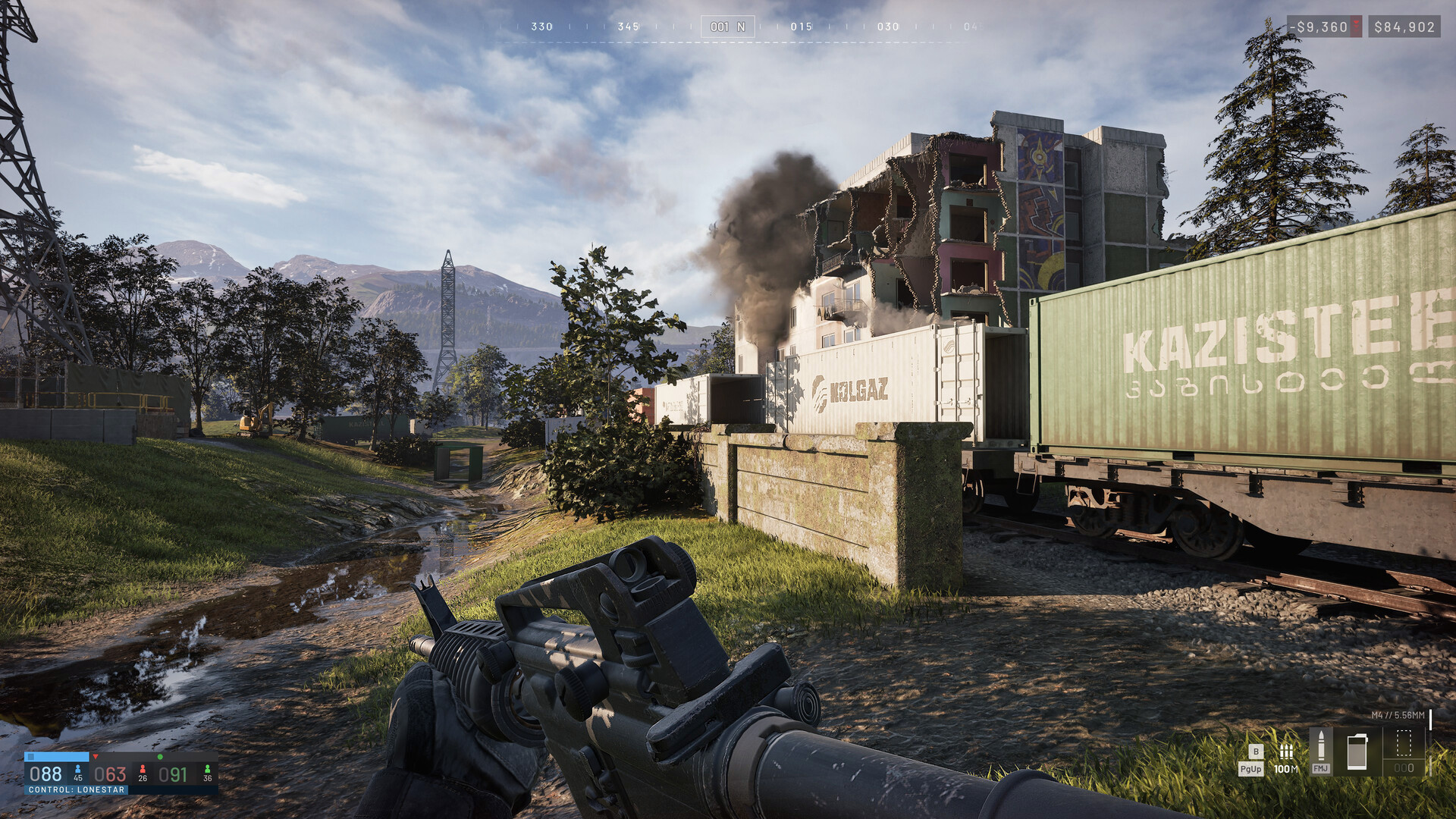
Destructible environments are another defining element of WARDOGS. Buildings and other structures can be damaged or destroyed through combat, including attacks involving rocket launchers and heavily armed vehicles. At the same time, players can construct and fortify positions to establish tactical advantages. This combination creates a battlefield in which the physical environment is not simply a fixed arrangement of cover and obstacles. It can be altered by the actions of the people fighting over it.
The strategic implications extend beyond the immediate spectacle of collapsing buildings. A structure can influence movement, visibility, and the availability of protected positions. If it is destroyed, the resulting change may alter how players approach an objective or defend a route. Conversely, constructing a fortification can transform a vulnerable position into a more useful defensive location. The value of either action depends on the location, the current distribution of enemy forces, and the extent to which the changed terrain affects the larger contest.
Destruction as a change in tactical geometry
The destruction of a building can remove a position that previously offered concealment or protection. It may expose players to new lines of sight, change the routes available for movement, or eliminate a position that opponents were using to contest an approach. The effects depend on the structure and the circumstances; destruction does not automatically benefit the faction responsible for causing it.
Construction as a commitment to a location
Building and fortification introduce a complementary strategic choice. Constructing a defensive position can improve the usefulness of a particular location, but the investment makes the most sense when that location serves a meaningful purpose. A fortification near an important approach may help sustain pressure or make a defensive line more difficult to overcome. A structure in a location that the battle has moved away from may provide much less value.
This creates a relationship between environmental control and territorial control. The Control Zone determines which territory matters for scoring, while construction and destruction influence how effectively players can occupy or contest that territory. Because the active objective and the surrounding battle can change, the usefulness of a previously established defensive position is not necessarily permanent. The environment becomes part of the ongoing strategic calculation rather than a static backdrop to gunfights.
8. Forward Operating Bases and Logistics: The Infrastructure of Sustained Combat
WARDOGS allows players to construct and fortify important locations, including forward operating bases, creating opportunities to support the larger battle through infrastructure rather than direct combat alone. This adds another layer to the relationship between individual action and faction performance. An effective military operation requires more than the ability to win isolated engagements; it also depends on the movement of people, access to useful positions, and the ability to maintain pressure as the battle develops.
Logistics becomes particularly relevant on a battlefield where the overall map is much larger than the active Control Zone. Moving players across substantial distances can influence how quickly a faction can reinforce a contested position. Transport aircraft and ground vehicles offer ways to connect players with the locations where their presence may matter most. A player who carries teammates toward the objective may contribute to territorial control even without participating directly in the subsequent firefight.
Infrastructure connects separate engagements
A forward operating base can provide a focal point for activity beyond the immediate objective. Its potential value comes from its relationship to movement and the locations where players need to operate. An established position may support a sustained presence in an area or help organize activity around an important route. However, infrastructure is useful only insofar as it supports the faction's wider objectives.
The relationship between transport and scoring
Transport can have an indirect but meaningful effect on the scoring system. A player who arrives at the Control Zone in time to help establish numerical superiority can affect the faction's ability to accumulate points. A vehicle that carries several teammates may therefore influence the outcome through the players it delivers rather than through its own weapons.
This makes logistics an important example of the game's broader design philosophy. The economic system rewards more than direct combat, and the objective system recognizes the importance of presence rather than simply the number of eliminations. Transport, construction, and support actions can connect these systems by helping players reach the locations where they can influence the match. Logistics is not separate from the battle; it is one of the mechanisms through which the battle is sustained.
9. Communication and Player-Driven Conflict: The Human Element of WARDOGS
WARDOGS incorporates proximity-based voice communication into its player-driven multiplayer environment. Nearby players can communicate locally, allowing conversations to emerge from the positions they occupy rather than relying exclusively on abstract team-wide coordination. This feature supports tactical communication, informal interactions, and the unpredictable encounters that arise when large numbers of players share a contested battlefield. The game's developers describe the overall experience as player-driven, emphasizing freedom in how players approach the conflict.
Communication becomes especially important because the battlefield contains multiple objectives and forms of activity. Players may be fighting inside the Control Zone, transporting teammates, constructing defenses, engaging enemy vehicles, or operating away from the main concentration of forces. These activities can contribute to a common faction objective, but their value increases when participants understand what is happening elsewhere. Local voice communication can help nearby players coordinate their immediate actions, while the broader structure of the match gives those actions a strategic context.
Individual freedom within a shared objective
The game allows players to pursue different forms of participation. A player might focus on infantry combat, another might specialize in transport, and another might concentrate on long-range engagements or fortifications. These approaches can coexist because the faction's success does not depend on every participant performing the same task. Instead, different forms of activity can contribute to a larger territorial contest.
Emergent teamwork and unpredictable encounters
A player-driven sandbox also creates situations that are not entirely determined by a predefined sequence of events. The location of the objective, the decisions of three competing factions, and the actions of individual participants combine to create changing circumstances. A group might organize a coordinated movement toward the objective, while nearby players independently discover an opportunity to support the same effort.
The resulting experience depends on the interaction between designed systems and human behavior. Persistent cash gives players economic incentives, the Control Zone creates a shared goal, vehicles enable movement, and local voice communication creates opportunities for coordination. None of these elements alone explains the full character of WARDOGS. Their significance comes from how players combine them in situations that can develop differently from one match to the next.
10. The Long-Term Battle: How the Systems Converge at the Victory Threshold
The final strategic picture emerges when territorial scoring, persistent cash, combined-arms warfare, and environmental change are considered together. WARDOGS sets a clear victory condition: the first faction to reach 100 points wins. Yet the path toward that threshold depends on numerous connected decisions. A faction must establish sufficient presence in the Control Zone, respond to the moving Hot Zone, preserve or replace its combat capabilities, and use the surrounding terrain in ways that support its objectives.
Consider a hypothetical phase of a match in which two factions are contesting a heavily damaged urban area near the active objective. One faction uses transport to bring additional infantry into the zone, while another spends resources on vehicles and attempts to pressure the approach. The Hot Zone then shifts the concentration of valuable activity, changing where players can obtain increased rewards and greater scoring influence. A building that previously offered defensive cover is destroyed, altering the available routes and exposing positions that had been relatively protected. No single event determines the result. Instead, the outcome develops through the combined effect of movement, positioning, resource expenditure, and territorial presence.
From individual decisions to faction-level outcomes
The economy gives individual actions consequences beyond a single engagement, while the objective gives those actions a common direction. A player who spends money on transport may help teammates reach the scoring area. A player who revives a squadmate may help preserve the faction's presence. A player who destroys a structure may change the geometry of a contested position. A player who chooses not to spend heavily may preserve resources for a later opportunity. These actions differ substantially, but each can influence the larger battle through its relationship with the game's systems.
Why WARDOGS is more than an elimination-based shooter
The distinctive feature of WARDOGS is not simply that it contains large battles, vehicles, or destructible buildings. It is that these elements interact with a persistent economic structure and a territorial scoring system. Combat can generate rewards, spending can change future capability, transport can change the number of players reaching the objective, and environmental changes can alter the usefulness of a location. The game therefore links tactical encounters to an evolving strategic situation.
WARDOGS is also an Early Access game, meaning its systems and balance may change as development continues. The broad relationship between the persistent economy, territorial warfare, and player-driven combat provides a useful framework for understanding the game's identity, but the precise value of particular weapons, vehicles, and economic decisions may evolve through future updates.
The overall design presents a conflict in which success is measured through more than personal combat performance. Players participate in an economy, contribute to a shared territorial objective, alter the physical battlefield, and influence the movement of friendly forces. The faction that reaches the victory threshold is the one that ultimately converts its available resources and player activity into sustained scoring progress. That relationship between money, territory, and collective action is the defining strategic idea behind WARDOGS.