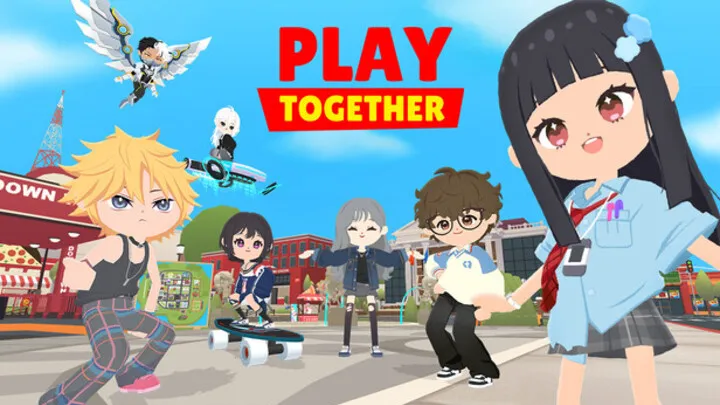


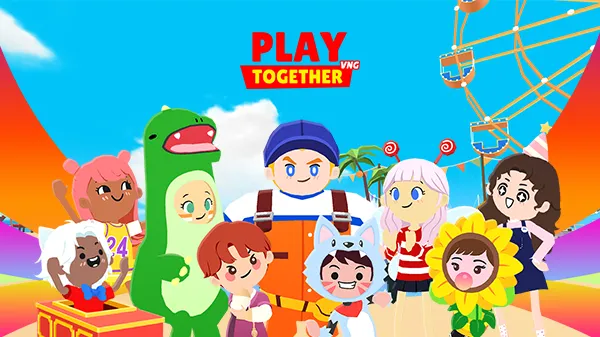
The metaverse is often discussed as a theoretical future, yet within the vibrant, cartoonish borders of Play Together, it has already established a complex socio-economic reality. Developed by Haegin, Play Together is frequently dismissed as a simple collection of minigames for a younger demographic. However, beneath its saturated palette lies a sophisticated study in virtual urbanism and emerging digital hierarchies. This article moves beyond the mechanics of "how to fish" or "how to earn stars" to dissect the evolution of Kaia Island as a living laboratory for human interaction, examining how identity, scarcity, and communal ritual have transformed a mobile game into a persistent digital society.
1. The Genesis of the Island: From Void to Virtual Playground
In the beginning, Kaia Island was a structural necessity—a container for player interaction that prioritized accessibility over complexity. The architecture was intentionally "soft," featuring rounded edges and a lack of punishing physics, designed to foster a sense of psychological safety. This initial phase of the game focused on the democratization of space, where every inhabitant started with a cardboard box and a shared horizon. It wasn't just a map; it was a blank slate for a post-physical world where the primary currency was presence.
As the population grew, the meaning of the space shifted from a playground to a metropolis. The central Plaza became the heartbeat of a new civilization, mimicking the "third places" of the physical world—those spaces between work and home that are essential for social health. By analyzing the early layout, we see a deliberate attempt to funnel diverse player types into a singular, high-density zone, forcing the kind of spontaneous "weak-tie" interactions that are often missing in more fragmented social media platforms.
2. The Architecture of Aspiration: Decoding Home Customization
The transition from the "Cardboard Box" to the "Magic Castle" represents more than just a progression of wealth; it is an exploration of the digital self-concept. In Play Together, the home serves as a semi-private theater where players curate their identities for a public audience. Unlike physical housing, which is limited by geography and material cost, Kaia Island housing is an exercise in pure aesthetic signaling. The home is not for shelter; it is a monument to the player’s history, achievements, and social status.
The Semiotics of Interior Design
The choice of furniture and layout acts as a non-verbal language.
- The Exhibitionist Layout: Open floor plans designed for high-capacity house parties, prioritizing social flow over personal comfort.
- The Collector’s Museum: Densely packed spaces showcasing rare fish or limited-edition event furniture, signaling "OG" status (Old Generation player).
- The Roleplay Set: Meticulously crafted classrooms, hospitals, or cafes that transform the home into a functional stage for collaborative storytelling.
3. The Ritual of the Catch: Fishing as a Meditative Economy
While fishing is mechanically simple, its role in the Kaia Island ecosystem is profound. It serves as the island’s primary labor market, but one that borders on the spiritual. Players will stand at the water's edge for hours, engaged in a repetitive, rhythmic activity that mirrors real-world artisanal labor. This "blue-collar" foundation of the economy is what gives the higher-tier social interactions their value; the luxury of a designer outfit is earned through the patient, quiet endurance of the rod and reel.
The Psychology of the Shadow
The "shadow" in the water creates a unique tension between hope and disappointment. When a player hooks a "Crown" or an "XXXXL" rare species, it triggers a global server announcement—a digital shout that echoes across every instance of the game. This creates a shared victory, where the individual achievement is witnessed by the collective, reinforcing the idea that even in a digital world, we crave the validation of our peers for our solitary efforts.
4. The Emergence of the "Flex" Culture and Digital Classism
As the game matured, a distinct social hierarchy emerged, driven by the scarcity of limited-time items and the high cost of luxury vehicles. The "Flex" (showing off wealth) became a central gameplay loop. This isn't merely vanity; it is the establishment of a reputational economy. In a world where everyone can eventually earn everything, the speed and exclusivity of one’s acquisitions become the primary markers of influence.
This classism manifests in subtle ways, such as the "fashion show" culture in the Plaza. Players with basic outfits often find themselves on the periphery of social circles, while those in complex, glow-in-the-dark, or branded attire (like the LINE FRIENDS or 7-Eleven collaborations) form the "in-groups." This mirrors the conspicuous consumption described by economists like Thorstein Veblen, where the utility of an item is secondary to the social power it grants the owner.
5. The Evolution of Collaborative Play: The Game Party Paradigm
The "Game Party" building represents the shift from passive socialization to competitive camaraderie. By gamifying the social experience through a rotation of Fall Guys-style obstacle courses, Play Together prevents the social stagnation often found in chat-based metaverses. These games act as "social icebreakers," stripping away the status markers of the Plaza and forcing everyone—regardless of their outfit—into a state of chaotic equality.
Hierarchies of Skill vs. Hierarchies of Wealth
Within the Game Party, a different power structure exists:
- The Speedster: Players who have mastered the movement physics and can clear the "Honeycomb" or "Rotating Log" without a single mistake.
- The Strategist: Those who use the mechanics of the game to hinder others, asserting dominance through tactical play.
- The Casualist: Players who participate solely for the Star rewards, maintaining the "working class" of the Game Party economy.
6. The School System: Institutionalizing Digital Childhood
The inclusion of the School on Kaia Island is a fascinating attempt to replicate the institutional structures of the real world. By providing a scheduled environment where players must attend "classes" (mini-games) and follow a bell system, the game creates a sense of temporal rhythm. It provides a shared framework of "work" and "play," giving players a reason to gather at specific times and engage in role-reversed scenarios where they can be the teacher or the principal.
This institutionalization serves to ground the fantastical elements of the game in a relatable reality. For younger players, it is a space to rehearse social roles; for older players, it is a nostalgic playground. The School is the primary site for emergent roleplay, where the community creates its own dramas and narratives that the developers never explicitly programmed, proving that the players are the true architects of the game's culture.
7. The Night Cycle and the "Zombie Virus": The Dark Side of Kaia
When the sun sets on Kaia Island, the mood shifts from bright optimism to a playful form of horror. The "Zombie Virus" mode at the Plaza transforms the social space into a survival arena. This cyclical shift is crucial because it introduces conflict into a world that is otherwise overwhelmingly positive. It allows players to interact in a way that isn't based on cooperation or consumption, but on the primal thrill of the chase.
This duality—the bright day and the dark night—prevents the metaverse from becoming "uncanny" or boring. It acknowledges that human interaction requires a degree of friction. The Zombie mode allows for a safe expression of aggression and competition, which actually strengthens the social bonds of the community. After the "virus" is cured by the morning sun, the return to peace feels earned rather than default.
8. The Commercial Frontier: Branded Spaces and Virtual Labor
The integration of real-world brands like 7-Eleven, Korea Home Food, and various fashion labels marks the transition of Play Together from a game to a commercial platform. Unlike traditional advertising, these are "functional" ads. You don't just see a 7-Eleven; you walk in, buy a virtual snack, and gain a temporary movement buff. This blurs the line between the physical and digital economies, turning players into consumers of virtual versions of real products.
The Concept of "Prosumerism"
In this environment, the player becomes a "prosumer"—both a producer of the game's culture and a consumer of its commercial content.
- Virtual Jobs: Working at the Pizza Shop or the Mart mimics real-world labor for digital rewards.
- Brand Loyalty: Players develop an affinity for brands within the game that translates to the real world, making the Kaia Island resident a valuable demographic for marketers.
9. The Global Village: Cross-Cultural Collision and Translation
One of the most profound aspects of Play Together is its lack of regional "sharding" in common areas. You might be fishing next to someone from Brazil, while a player from Vietnam chats nearby. This creates a globalized digital culture where slang, emotes, and fashion trends travel across borders at lightning speed. The "Emote" system becomes a universal language, allowing for complex emotional exchanges without a single shared word.
This cross-cultural interaction isn't always perfect, but it creates a unique form of digital diplomacy. Players learn to navigate cultural differences in a low-stakes environment. The shared pursuit of a rare pet or a high score in a minigame acts as a bridge, proving that the metaverse’s greatest strength is its ability to flatten geographical barriers and foster a sense of "Global Citizenship."
10. The Future of the Virtual Self: Transcending the Screen
As we look toward the future of Kaia Island, we see a trajectory toward even deeper immersion. The game is no longer just an app on a phone; it is a persistent identity. Through the "Kaia Talk" system and the in-game social media feed (resembling Instagram), players maintain their personas even when they aren't "playing" the core games. The virtual self has become as significant as the physical self for many inhabitants.
Ultimately, Play Together is a testament to the human need for community. Whether we are chasing a giant shark or decorating a virtual kitchen, we are seeking connection. The game provides the infrastructure, but the players provide the soul. As the boundaries between our digital and physical lives continue to thin, Kaia Island stands as a colorful, chaotic, and deeply human blueprint for how we might live together in the digital centuries to come.